

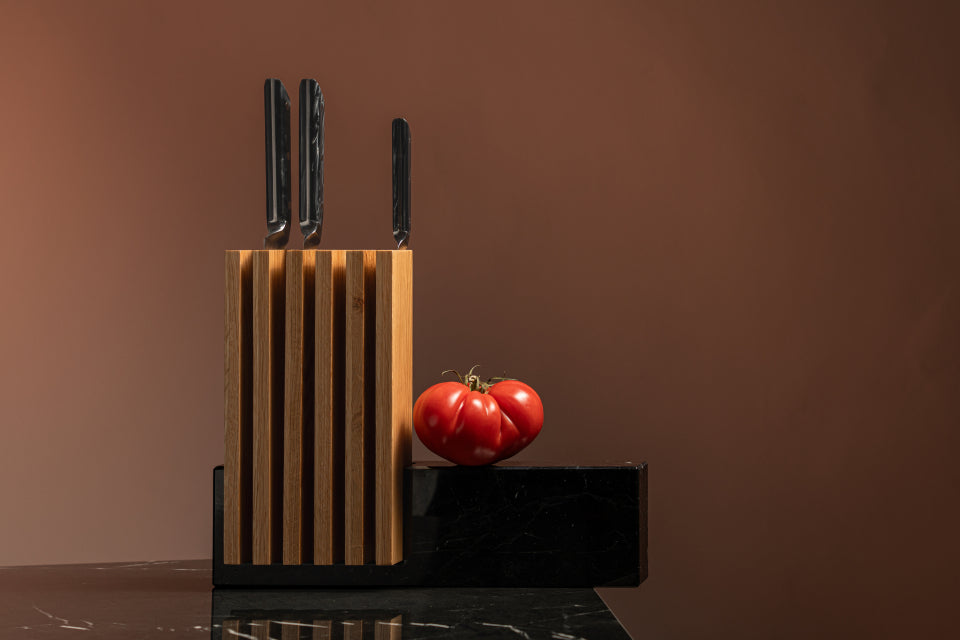
How product design, in-store presentation and collaboration with architecture and design studios help buyers reduce risk, differentiate their product range and build brands capable of generating demand.
Design Is Not Decoration: It Is a Business Decision
In retail, design is too often mistaken for the aesthetic layer added at the end of the process. Colours, shapes and finishes are discussed once the product has already been defined and simply needs to look more appealing. Design that creates value begins much earlier: it shapes function, ergonomics, materials, the range structure, presentation, the brand story and the consumer experience, from first contact to everyday use.
For a purchasing director or product manager, this distinction is essential. A well-designed proposition is not merely more attractive: it is easier to understand, defend internally, implement, sell and sustain over time. It reduces dependence on price as the sole argument and provides visible reasons to allocate space, build a category and maintain a clear market position. In other words, it transforms a product into a complete commercial proposition.
In categories such as cutlery, cookware, kitchen utensils and flatware, design also has a unique ability to connect the technical with the emotional. A knife must cut effectively and be safe and comfortable to use, but it can also convey precision, tradition, modernity or a sense of naturalness. When form, material, balance, finish, packaging and display all tell the same story, consumers understand the product’s value even before using it.
B2B2C design: for buyers, sellers and users
Retail-focused design must respond to a complex decision-making chain. The manufacturer develops the proposition; the professional buyer decides whether it should be included in the assortment; the distributor implements and activates it; and the end consumer ultimately confirms or rejects all those decisions through their purchase. Designing solely for the end user is not enough if the proposition does not help the buyer justify it or the retailer present it clearly.
The B2B2C approach requires three questions to be addressed simultaneously. For the purchasing team: what category problem does it solve, and why does it deserve space? For the retailer: how will it be presented, explained, replenished and activated? For the consumer: why is this option relevant, desirable and right for me? Design works when all three answers reinforce one another rather than compete.
This perspective changes the commercial conversation. The manufacturer stops offering isolated product references and begins presenting an architecture of value: product, identity, range, materials, display tools, content and sales arguments. For the purchasing manager, the proposition becomes easier to assess because they can visualise its entire journey, from the assortment meeting to the consumer’s basket.
The Real Pain Points Faced by Purchasing Directors and Managers
Purchasing teams receive more proposals than they can incorporate. They must make selections based on incomplete information, anticipate product turnover, protect margins and prevent the assortment from becoming a collection of similar products. One of their main challenges is a lack of differentiation: suppliers may present strong product features, but without a clear reason why the end customer should choose them over alternatives already available.
Another problem is complexity. Ranges with too many references, difficult-to-interpret codes, barely visible differences or technical arguments that consumers do not understand all increase risk. Buyers know that a confusing collection requires more training, more signage and greater involvement from sales staff. If the product does not explain itself, its potential depends too heavily on flawless in-store execution, which is difficult to guarantee across large retail networks.
There is also constant pressure on space, inventory and profitability. Every new addition must demonstrate that it can generate turnover, increase basket value, deliver margin or attract a relevant customer segment. Design does not eliminate these constraints, but it can reduce them: it organises the range, differentiates functions, makes value visible, encourages cross-selling and supports a compact, coherent retail display.

Why Collaborate with Architecture and Design Studios
Collaboration with architects, industrial designers, interior designers and creative studios brings value when it connects the product, space, brand and user experience. Their work with proportions, materials, light and hierarchy can turn a collection into a recognisable whole.
A product designer can question ergonomics, simplify components or find a clearer way to express function. An architecture studio can imagine how a collection works in a real space, how it is grouped, from what distance it can be recognised and how it relates to other materials. A branding team can translate this into a visual language the brand can sustain for years. Collaboration creates value when it brings these disciplines together, rather than simply adding a designer signature at the end.
External expertise matters to buyers when it creates tangible improvements: better use, clearer differentiation, stronger displays or a story customers understand. The product's value should remain clear even without the studio's name.
Designing with External Studios Without Losing Brand Identity
The manufacturer contributes technical knowledge, history, production processes and market experience. The studio adds methods, perspective and synthesis. A clear brief connects both around the commercial problem, audience, manufacturing constraints and intended positioning.
The most common risk is to create a shiny piece that is alien to the rest of the catalogue. It can attract attention during a release, even if it is difficult to build a family or explain its relationship with the brand. To avoid this, it is useful to define permanent codes: principles of form, materials, details, colors, language and levels of innovation. The designer can reinterpret them, but not ignore them.
This continuity is especially important for retail. Buyers value novelties, but they also need stability. A collection must be able to grow, incorporate new typologies and remain recognizable. When collaboration generates a system and not just an object, it increases the commercial life of the project and reduces the risk that the launch depends on a passing fashion.
From the isolated object to the collection system
The design acquires more strength when it stops working reference by reference and organizes a family. A well structured collection allows each product to have personality without losing kinship. The consumer recognizes the whole, understands the functions and can start a purchase with one piece to continue later with others. For the retailer, the family creates more presence and makes possible a more orderly display.
The system must establish which features remain consistent and which can vary. The handle geometry, transitions, selected materials or visual language may stay the same while the size, blade, capacity or purpose changes. This balance makes the range easier to navigate, avoiding both a chaotic assortment and a range so uniform that every item looks identical.
From a shopping perspective, the collection approach improves the ability to build assorted steps. It allows you to select an input, a kernel and extensions; create sets; propose complementary sales and adapt the implementation to the size of each store. The design thus becomes a category management tool, not just a product quality.
Design that facilitates choice and reduces the risk of purchase
A product can be excellent yet difficult to choose. Clear shapes, sizes, colours and packaging help customers understand the range and its uses without making the packaging read like a manual.
This clarity also reduces returns and frustration. When the expectation created by the presentation coincides with the actual experience, confidence increases. The consumer understands what he buys, what serves and what level of performance he can expect. In ecommerce, where he cannot touch the product, the readability of the design and the quality of the representation are even more decisive.
For the purchasing manager, an easy to choose proposal is a more scalable proposal. It depends less on expert vendors, works better in self-service and needs fewer corrective elements. Clarity does not impoverish positioning; on the contrary, it transmits security and domain of the category.
How design stimulates final consumer demand
Demand is not only stimulated by promotions. It also grows when the consumer discovers a possibility he had not considered, better understands a difference or feels that a product fits his identity. Design creates that impulse by transforming a functional need into a desirable choice. It makes a daily tool to be perceived as a piece to enjoy, display, give away or conserve.
Emotional connection can be built from different territories: professional precision, Mediterranean cuisine, crafts, innovation, sustainability, nature or contemporary design. The important thing is that the territory is credible and supported by the product. A story without evidence generates brief attention; a materialized narrative in form, touch, origin and experience generates preference.
Design also favours conversation. A distinctive object is photographed, recommended and recognized. In categories of home, where products are part of the personal space, this social dimension is relevant. The consumer not only buys a benefit; incorporates an element into his kitchen and, to some extent, expresses a way of living.
The retail presentation: the space also designs the product
Context changes how a product is perceived. A grouped collection communicates purpose, while suitable display materials reinforce its identity. Lighting, height, order, rhythm and open space all influence attention and perceived quality.
Architects and interior designers can develop adaptable display principles, including modules, stands, materials, grouping guides and graphics. These help maintain the range's identity across large and small retail spaces.
The buyer needs to imagine this implementation. Therefore, a solid commercial proposal should include visualizations, options per metre available, recommended selection and replacement logic. When the provider shows how the space will occupy and what reading the collection will have, it reduces uncertainty and facilitates internal decision.
Product design as a value signal before testing
Most products are judged before use. Consumers observe proportions, materials, touch, color, unions, apparent weight and precision of details. In a few seconds, they build a quality expectation. Therefore, design acts as a signal: it helps to interpret what they cannot yet verify, such as the durability, performance or care with which it has been manufactured.
In a kitchen knife, the meeting point between blade and handle, the continuity of its lines, the choice of wood or polymer, the rivet finish and the feeling of balance communicate as much as a technical specification sheet. Design does not replace performance; it makes it easier to recognise. When form follows function, technical quality becomes visible as perceived value.
For the professional buyer, this ability is important because it reduces the distance between the commercial argument and the reaction of the public. A proposal that clearly expresses its positioning needs less explanation and can better sustain its price. If the product looks generic, any premium discourse is fragile; if each formal decision is aligned with the promise, the brand gains credibility.
Coherence between product, packaging, display and communication
A sophisticated product in generic packaging, or an emotional campaign with unsuitable imagery, can create an inconsistent impression. Customers may not identify the cause, but the overall proposition feels less convincing.
Coherence does not mean repeating the same resource everywhere. It means sharing a central idea. If the product is inspired by honest materials, craftsmanship and durability, that identity can be translated into a palette, a texture, a photographic language, a way of exposing and a verbal tone. Each contact adds a different layer, but everyone builds the same position.
For purchases and retail marketing, this consistency offers an operational advantage. The collection comes with a recognizable system that can be moved to the retail shelf, the showcase, the product sheet, the seasonal campaign and the social content. The less you have to rebuild the distributor, the easier it will be to activate the proposal and maintain its consistency between channels and stores.
Omnichannel design: identity must survive the thumbnail
Products are often discovered on a screen before they are seen in store. Design must work in photography, video, overhead views, details and marketplace thumbnails. Subtle shapes can disappear, busy packaging becomes unreadable and unclear range identities get lost in a grid.
Designing for omnichannelity does not mean simplifying up to banality. It means checking that identity works in different scales and contexts. The silhouette, contrasts, distinctive detail and consistency of the range must be visible both in a small image and in a physical exhibition. Digital content can also reveal what retail shelf does not explain: ergonomics, processes, materials and uses.
For the retailer, this preparation reduces costs and accelerates the launch. Consistent photographs, videos, renders, clear sheets and campaign resources allow to activate the product without rebuilding all the content. The design thus becomes a productive platform for marketing, not an image that only works in the manufacturer's catalog.
Design, brand and price positioning
The price is best maintained when the value is visible. A brand can explain that it uses better materials, more demanding processes or specialized manufacturing, but if the product and its presentation do not express that difference, the consumer will compare mainly by price. The design translates attributes difficult to observe in understandable signals and helps prevent the category from becoming a promotional war.
This does not imply that everything should look luxurious. Design should be suitable for positioning. A professional proposal can communicate robustness and precision; a home line can prioritize closeness and ease; a premium collection can work detail, materiality and experience. Credibility arises from the adjustment between promise, public and execution, not from decorative excess.
For purchases, a well-expressed positioning facilitates price architecture. It allows you to understand what role each family fulfills, where it stands with respect to competitors and which customer it can attract. The brand gains a more defined position and the distributor gets an assortment with clear steps, instead of references that cannibalize each other.
A concrete value offer for the purchaser
Design must be translated into benefits that matter at a shopping meeting. The first is visible differentiation: a reason why the proposal is not lost between equivalent products. The second is easy choice: a range that the consumer can understand without constant assistance. The third is potential margin: a perception of value capable of sustaining the price and reducing the dependence on discounts.
A fourth benefit is productive use of space: a coherent collection supports grouping and cross-selling. A fifth is readiness for campaigns, with usable materials and stories. A sixth is lower operational friction through organised product references, practical packaging and channel-ready content.
The final argument should not be that the product has been designed by a recognized studio, but that collaboration has solved specific problems. It has improved ergonomics, simplified the range, created a distinctive presence, made the choice clearer or built a language that the retailer can activate. That is the difference between design as an ornament and design as a commercial investment.
A collaboration model between manufacturer, retailer and creative studio
The best proposals can be developed with a collaborative logic. The manufacturer provides the technical platform and brand vision; the study transforms the challenge into product solutions and experience; the retailer provides knowledge of the buyer, implantation restrictions and real category data. To involve these perspectives at suitable times avoids designing in a commercial vacuum.
The collaboration does not require the retailer to intervene in every detail. It can be structured in phases: definition of the problem, exploration of concepts, technical validation, test of understanding, proposal of implementation and plan of launch. In each phase decisions are made with clear criteria. The result is more robust because both the desire of the consumer and the reality of the retail shelf have been considered.
Agree the launch materials in advance: images, sales guidance, training, display modules, digital content and campaign timing. Shared understanding turns a creative collaboration into a practical growth strategy.
How to measure design return
The design must be evaluated with business indicators, although not all of its effect appears in a single figure. In the launch phase, buyers can measure acceptance, implementation speed, percentage of incorporated references and quality of the space achieved. In-store, the units by ticket, cross-selling, the evolution of the average price and the need for promotion.
In digital you can analyze click-through rate, conversion, interaction with images, time of permanence and performance of creativity. Also relevant are returns, queries to the service of attention and reviews: they allow to know if the design has created correct expectations and if the experience confirms the promise. For a collection, it is appropriate to observe not only the individual performance, but the ability of some references to drag to others.
Qualitative metrics complete the reading. Does the store team understand the range? Can the buyer explain its difference in a sentence? Does the consumer identify the brand without seeing the logo? Does the proposal remain consistent in different channels? These questions reveal whether the design is building a brand asset or has simply produced an attractive novelty.
Design the choice, not just the object
The design creates retail value when it connects the product with all the decisions surrounding it. It helps the manufacturer to express its capacity, the buyer to reduce uncertainty, the distributor to present and activate the offer, and the consumer to recognize a relevant choice. Its function does not end in the form of the object: it continues in the range, packaging, space, image and story.
The collaboration with architectural and design studios can accelerate this transformation, provided that it starts from a real challenge and integrates with the identity and technical knowledge of the brand. The goal is not to seem more creative, but to be clearer, more useful, more recognizable and more difficult to replace. When the design solves the pain points of retail, it ceases to be an aesthetic opinion and becomes a competitive advantage.
For directors and purchase managers, the most valuable proposal is one that comes prepared to work: a relevant product, an orderly collection, an adaptable presentation, usable contents and arguments that stimulate the final demand. Designing well means, ultimately, designing the choice. And a better designed choice has more possibilities to enter the assortment, gain space, sustain its price and stay in the mind of the consumer.
You may also like

The New ARCOS Knife Block Collection: Bringing Organisation, Value and Differentiation to Retail
The kitchenware market is evolving. Consumers are no longer looking solely for functional products: they expect solutions that help them organise their kitchens, complement their personal style and convey quality...

Designing the Knife the Industry Needs: Technical Adaptation, Innovation and Production for Every Process
In the food industry, a knife is not simply a cutting tool. It is an integral part of the production process, and its performance directly affects productivity, safety, hygiene, consistency...

The ARCOS Ibiza Series: A Profitable, Complete Knife Range That Is Easy to Sell
For retailers, introducing a knife series means more than adding products to the shelf. It should offer clear value to customers and be straightforward to sell in store. The new...
