

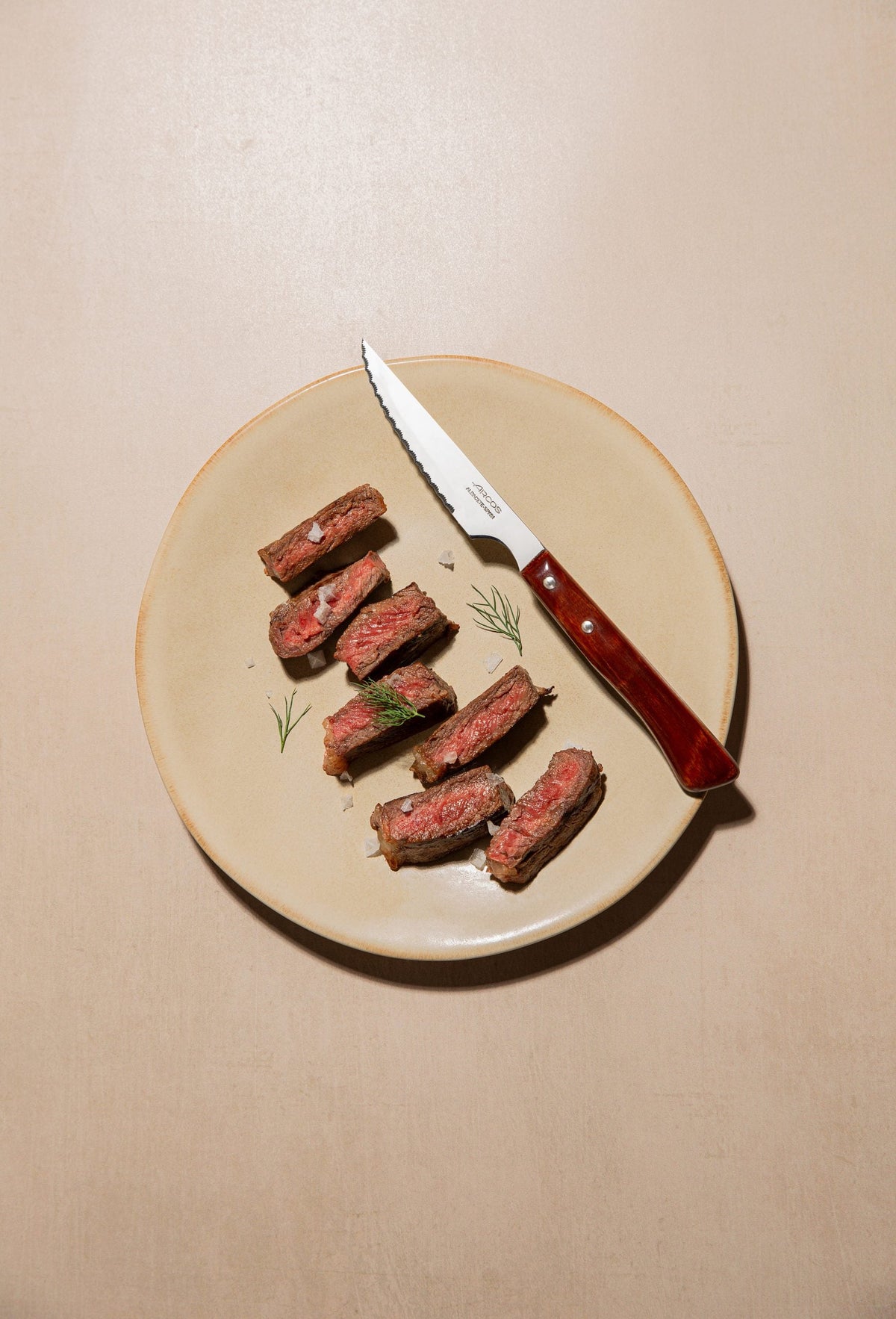
We carefully choose good meat, control its cooking and select a matching wine, yet sometimes overlook the knife used at the table.
In the end, we see how the meat is torn, loses juice and the experience ceases to live up to what we have prepared on the plate.
A steak knife is designed to help you enjoy meat with clean, comfortable cutting. A good one makes a noticeable difference to the meal.
What a Steak Knife is and what it's for
As we advanced you a few seconds ago, a steak knife is designed exclusively to cut meat in a clean, comfortable and accurate way directly on the table.
Unlike conventional table knives, a steak knife has a blade designed to cut through fibres, fat and tougher parts of the meat without excessive force.
Its role is at the table: cutting a chop, entrecôte, fillet or steak with precision and comfort.
That's why this knife is also known as a meat knife.

How does a steak knife differ from a standard table knife?
If you stop to check each one of them you will see that these knives are very similar, but there are important differences that we will explain to you today.
A standard table knife is generally designed for softer foods. A steak knife has an edge suited to cutting meat cleanly rather than tearing it.
In addition, it usually offers a greater cutting capacity, better penetration into the meat, more stability during use and a much more comfortable feeling in your hand.
Why a bad knife can ruin good meat
A dull knife encourages extra pressure, tearing the meat and making cutting awkward. The food can also cool while you struggle with it.
Although it does not seem to be perceived first, a bad experience in cutting can directly affect the appearance of the dish. Whether the meat is excellent or not, if it costs to cut it, the enjoyment will decrease. We assure you this.
Therefore, when someone asks with which knife the meat is cut, the answer is quite clear, with a knife specifically designed for it.
Straight or Serrated Edge: Which Should You Choose?
A common choice is between a plain and a serrated edge.
Serrated steak knives are popular because their teeth remain effective even as the edge wears. They work well for barbecues, chops and meat with a browned crust or outer fat.
On the other hand, smooth edge models offer extremely clean and elegant cuts. They are especially valued by those who enjoy premium meats and look for a somewhat more refined experience. Yes, they require a more constant maintenance that allows you to preserve that most optimal performance.
For everyday use, choose balanced, versatile steak knives. Robust models suit informal barbecues, while premium finishes, such as the Gregorio Arcos series, add a refined touch to the table.
How to care for a steak knife set
Wash by hand with warm water and mild soap, then dry immediately.
Even if the model is dishwasher-safe, hand washing helps preserve the edge and handle finish. Protect the blades during storage to avoid unnecessary knocks.
If the edge can no longer provide good cutting performance, consider renewing your steak knife set.
The best steak knives let you focus on the meal, making each cut feel natural, comfortable and precise.
You may also like

Arcos Non-Toxic: Our Guide to Cooking Without Toxic Substances
We are increasingly conscious of our diet. We read food labels carefully, look for better-quality ingredients, choose organic products and try to eat a balanced diet. Yet one important decision...

Types of Knife Holders for Different Kitchens
Knives once stayed hidden until needed. In modern kitchens, they increasingly form part of the visible design, sometimes taking a prominent place on the worktop. Open-plan kitchens connect cooking with...

Types of Honing Steels: When and How to Use the Right One
At some point in a knife’s lifespan, it stops cutting as well as it did when it was new. You notice it crushing a tomato instead of slicing through it;...