

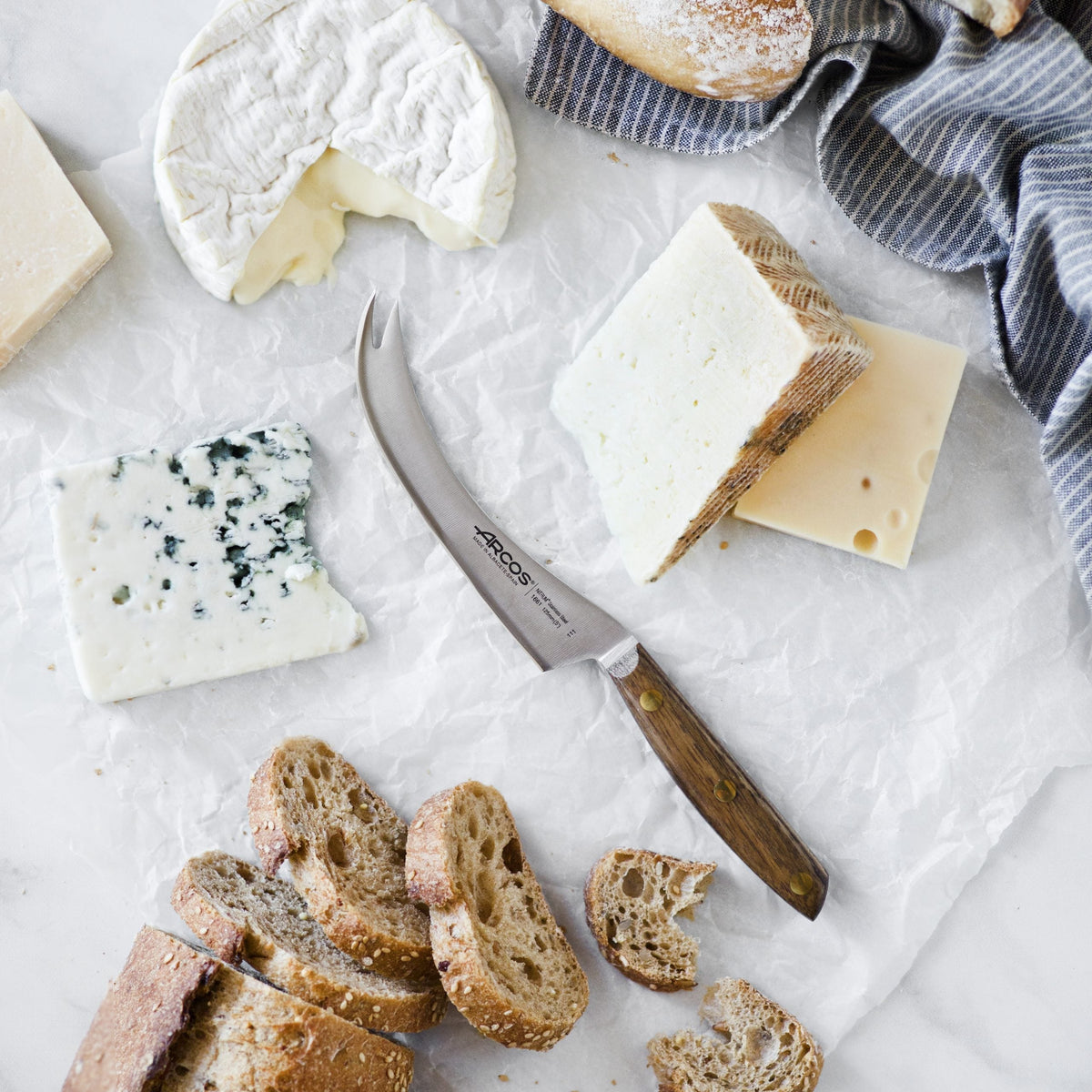
Cheese offers a rich variety of flavours, textures and aromas. Choosing the right knife for each type helps you cut it neatly and enjoy it at its best.
If you are a cheese lover, no matter where your favorites come from, and you have ever wondered why there are so many different cheese knives, you have come to the right place. With the help of our specialists in knives and kitchen accessories, we will explain which are the most common cheese knives, what each one is used for, and how to use them properly. Let the tasting begin!
Cheese knife, what's it for?
No matter the shape, appearance, or size, cheese knives are specifically designed to cut this delicious delicacy as efficiently as possible, without it falling apart or sticking to the blade.
From soft to aged cheeses, with rind, fresh, hard, or with mold—the type of knife you choose to cut any of them will directly influence their final presentation, flavor, and, of course, your own tasting experience.
You may have noticed that some types of cheese knives have peculiar shapes, such as two prongs, which serve a very specific function when cutting this food. The purpose of these prongs is to pick up and serve each piece of cheese once it has been cut, so you don’t have to touch it with your hands. It’s an extra touch of practicality and elegance when tasting cheese with friends. They’ll be amazed by your expertise!
Types of cheese knives
Different cheeses call for different tools. You do not need every cheese knife available, but understanding the main types helps you choose the right one for your cheeseboard.
- Soft cheese knife: Easily recognized by its perforated or hollowed blade, which prevents the cheese from sticking to it. It’s perfect for cutting Brie, Camembert, or goat cheese log.
- Hard cheese knife: This knife is much more robust, designed with a short blade and an almond-shaped tip. Ideal for cutting, chipping, or even shaving aged cheeses like Parmesan.
- Aged cheese knife: Its blade is much firmer and sharper than the others. With this type of knife, you can cut hard cheeses like Parmesan or Manchego without crumbling them.
- Universal cheese knife: Made with two prongs at the end, resembling horns, and stands out for its excellent versatility. It allows you to cut semi-soft cheeses and even serve them without touching the piece.
- Wire cheese cutter: useful for making clean cuts through soft or blue cheeses such as Gorgonzola and Roquefort.
- Cheese spreader: a tool for spreading creamy cheeses, such as cream cheese or mascarpone, rather than a conventional cutting knife.
- Cheese hatchet: Yes, you’re probably laughing at the peculiar name of this cheese knife. It’s the most recommended for the firmest cheese blocks, as it has a thick, short blade that lets you apply force without damaging the texture.
The best thing about having the right knife for each type of cheese is that it greatly enhances your tasting and sampling experience, especially because the cheese won’t suffer any damage.
In addition to these knives, there are other cheese utensils you might need if you’re a true cheese lover. From a cheese grater to serving tongs or forks, a cheese dome for storage, or special cutting boards.


How to use cheese knives
Use a suitable, clean knife with an effective edge. Make precise cuts and, where appropriate, serve cheese at room temperature to enjoy its flavour.
Now, after all this, there’s only one thing left: enjoy a delicious cheese pairing. See you in the next article.
You may also like

The 5 Essential Kitchen Knives You Need (and How to Choose Them)
One for meat, another for fish, a special one for cheese, even one just for bread. We completely understand— before you know it, one of your kitchen drawers ends up...

Annual Knife and Pan Checklist: How to Know What to Replace in Your Kitchen
One day, your favourite knife starts slipping on vegetables, food sticks to the frying pan and the peeler no longer works well. Should you repair these tools or replace them?...

A Quick Guide to Choosing and Caring for Non-Toxic Ceramic Pans
It is just as important to pay attention to how we cook as it is to know exactly which tools and utensils we use to do it. It is in...