

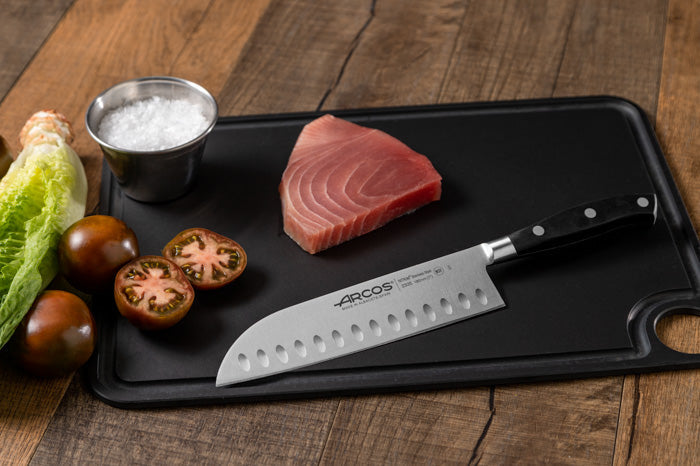
Have you ever sliced a courgette, soft cheese or cooked ham and found the food sticking to the blade? This happens in both professional and home kitchens.
We have good news for you. There are knives available that can help ensure this never happens again. Yes, you heard correctly. Thanks to granton-edge knives, designed specifically to make cutting easier and more comfortable in your kitchen. If you haven’t heard of them yet, stay with us, because we’re going to explain in detail exactly what they are and what advantages they offer compared to traditional knives.
Scalloped blades: what they are and what they do
Knives with scalloped blades have small hollows along the sides. These indentations serve a practical purpose rather than simply decorating the blade.
The hollows create small air pockets between the blade and food, helping reduce friction and sticking for cleaner, quicker cuts.
A scalloped blade is particularly useful when cutting softer, moist or thin ingredients that tend to cling to the knife.
Type of knife: main use and benefits
Different scalloped-blade knives suit different tasks. Here are some common types and their uses:
- Vegetables: Perfect for cutting courgettes, aubergines or tomatoes without the slices sticking to the blade.
- Soft cheeses: From brie to camembert, which tend to stick, these knives help the cheese glide smoothly as you cut.
- Cooked meats and cold cuts: useful for thin slices of cooked meat, roast beef and similar foods, with less sticking.
Less sticking means less time separating food from the blade and more even slices.

Caring for scalloped-blade knives
Care is similar to that of other quality knives, with a few details to remember.
- Cleaning: It’s best to wash them by hand with warm water and mild soap. By avoiding the dishwasher, you’ll help preserve both the edge and the blade.
- Sharpening: the hollows do not prevent sharpening. Use suitable tools and maintain the correct angle.
- Storage: use knife blocks, protective covers or magnetic holders to keep blades from knocking together.
- Handle care: wooden handles need extra attention to protect them from moisture.

Tips for Choosing the Best Granton-Edge Knife for Your Kitchen
Before choosing, consider blade length, material, handle and intended use. The right model depends on whether you mainly prepare vegetables, fish, cheese or other ingredients.
A scalloped blade can make everyday cutting more comfortable. Explore the Arcos range to choose one that suits your cooking style.
You may also like

The 5 Essential Kitchen Knives You Need (and How to Choose Them)
One for meat, another for fish, a special one for cheese, even one just for bread. We completely understand— before you know it, one of your kitchen drawers ends up...

Annual Knife and Pan Checklist: How to Know What to Replace in Your Kitchen
One day, your favourite knife starts slipping on vegetables, food sticks to the frying pan and the peeler no longer works well. Should you repair these tools or replace them?...

A Quick Guide to Choosing and Caring for Non-Toxic Ceramic Pans
It is just as important to pay attention to how we cook as it is to know exactly which tools and utensils we use to do it. It is in...